Unanswered questions
The astonishing mysteries of our universe: 10 facts few know

Right now, the Earth is hurtling through space at more than a million miles an hour. It’s being dragged toward something astronomers have never clearly seen. In one New Mexico town, at least one resident in fifty hears a low hum that no scientific instrument has ever detected. On the same planet, tiny songbirds navigate thousands of miles using a sense that humans still can't decode. Over history, science has answered countless questions, but not these. Here are 10 documented mysteries that still leave the world's researchers baffled.
1 The Great Attractor, the incognito force our galaxy is moving towards
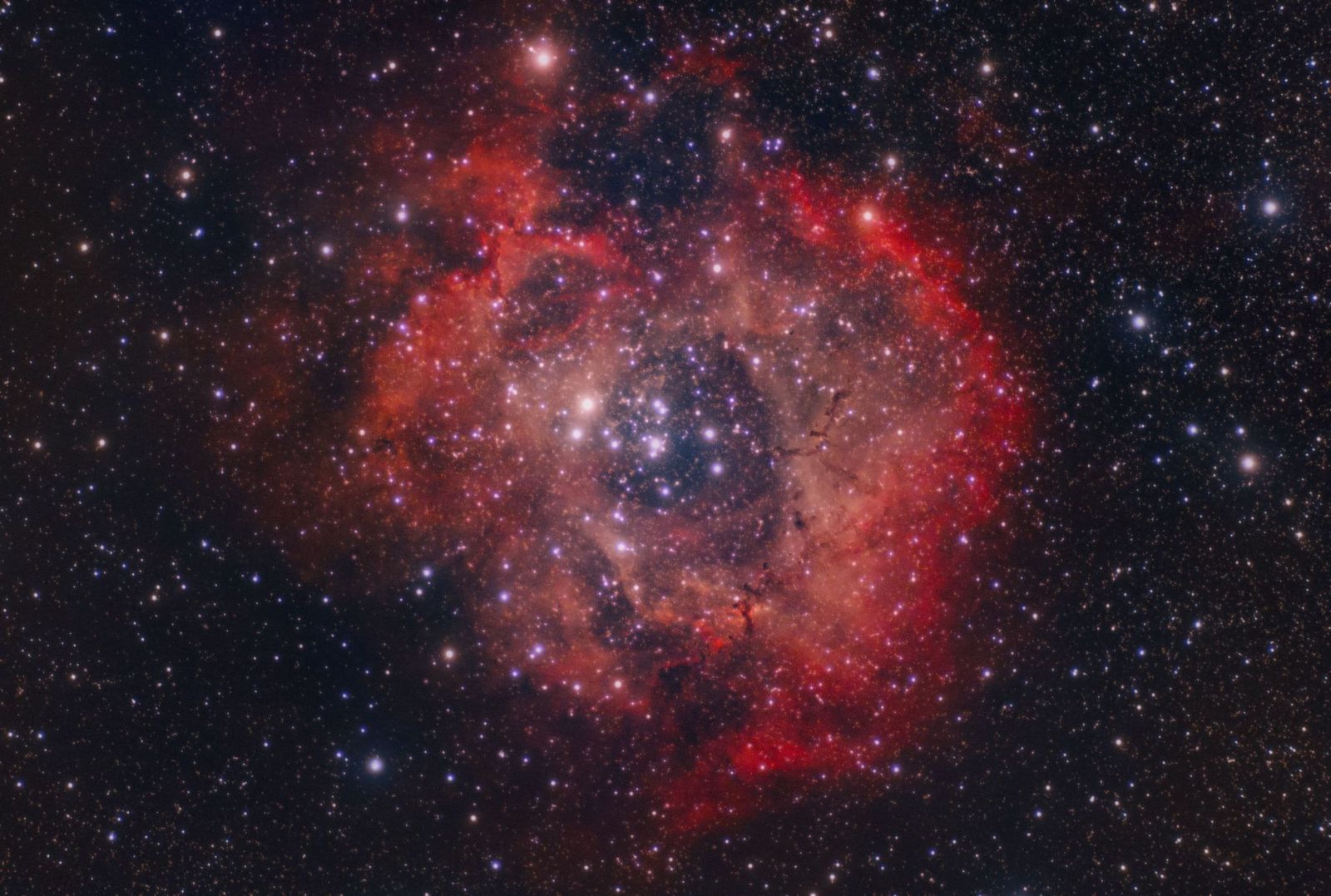
The Milky Way is not standing still. Together with thousands of neighboring galaxies, it’s being pulled across space at more than 1.2 million miles per hour. But scientists don’t know where we are heading.
In the 1970s and 1980s, surveys revealed that galaxies spread over hundreds of millions of light-years were streaming in the same direction, and it was assumed that it must be towards the bottom of an enormous cosmic valley. Astronomers traced the pull to a region they called the Great Attractor , some 150 to 250 million light-years away. Even though modern telescopes have let experts peer farther than ever, scientists still don’t understand what’s causing this gravitational acceleration.
2 The Fermi Paradox: Why have we no evidence of extraterrestrial life?

The Fermi Paradox is a simple argument: If NASA has confirmed more than 6,000 planets orbiting other stars, how is it that we know nothing about extraterrestrial life? In 1975, astronomer Michael Hart calculated that a civilization capable of traveling between the stars could spread across the entire galaxy in just a few million years , a blink compared with the galaxy's age.
So if intelligent life had arisen even once before us, its traces should be everywhere. Yet we have found none: no visitors, no artifacts, and no confirmed signal. The puzzle takes its name from physicist Enrico Fermi, who summed it up over lunch at Los Alamos in 1950 with a single question: "But where is everybody?"
3 Mysterious fast radio bursts from space
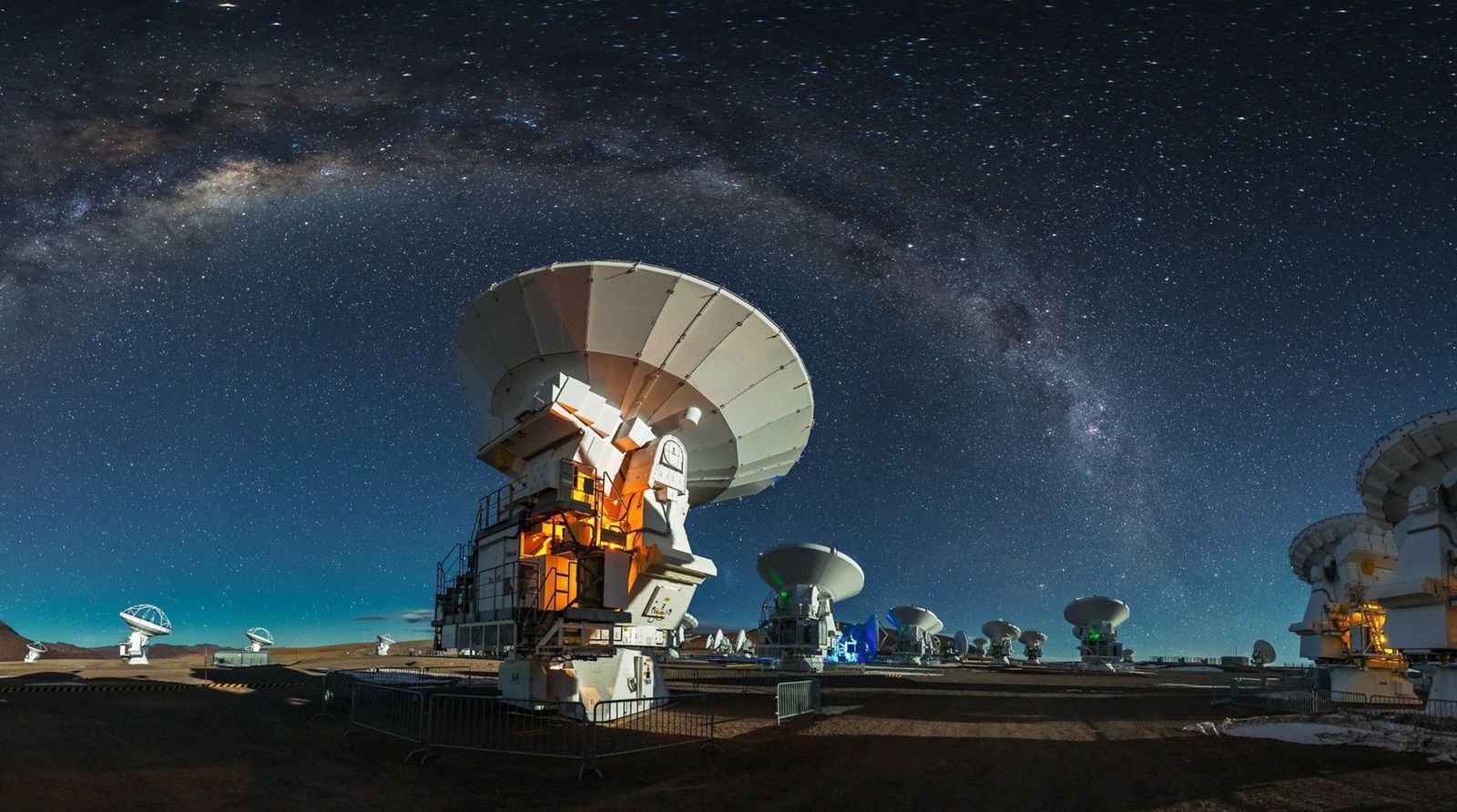
In 2007, a West Virginia University undergraduate spotted a blast of radio waves, recorded by Australia's Parkes telescope 6 years before. They lasted only milliseconds and seemed to come from far beyond our galaxy .
Over the following years, bursts kept coming. One source was found to flare on a cycle of about 16 days. In 2020, a burst was finally traced to a magnetar, the core of a dead star inside our own Milky Way. Then, in 2022, another was pinned to a cluster of ancient stars near the galaxy M81, where young magnetars are not supposed to exist. The journal Nature still describes these bursts as flashes "of unknown physical origin."
4 Creatures that can repair their whole bodies

In 1898, the American biologist Thomas Hunt Morgan experimented with freshwater flatworms called planarians and found that a fragment as small as 1/279th of a worm could regrow into a complete animal. More than a century later, scientists know that planarians carry a reservoir of stem cells called neoblasts, making up 20 to 30 percent of the body, but they are still working out how those cells know what to rebuild.
The axolotl, a salamander found in the wild only in the canals of Xochimilco in Mexico City, regrows entire limbs, parts of its spinal cord, and even portions of its heart and brain without scarring. And in 2021, Japanese researchers reported sea slugs that detach their own heads. The heads crawl away, keep feeding within hours, and grow an entire new body, heart included, in about three weeks.
5 The enigma of quantum entanglement

Quantum theory predicted that two particles could become entangled, linked so completely that measuring one instantly tells what will be found in the other, no matter how far apart they are. Albert Einstein called this "spooky action at a distance." In 1935, he and two colleagues argued that the theory was incomplete, and that hidden details must be pulling the strings. Experiments eventually ruled against him.
Beginning in the 1970s, American physicist John Clauser, who at first expected Einstein to be proven right, tested the idea with pairs of light particles. Frenchman Alain Aspect and Austrian Anton Zeilinger pushed the work further, and in 2022 all three shared the Nobel Prize in Physics. They demonstrated that quantum entanglement is real and that nature is inherently non-local.
6 How animal magnetoreception works

Every autumn, millions of songbirds set off on migrations of thousands of miles, many of them flying alone and at night. In the 1970s, German researchers showed that European robins carry a built-in magnetic compass. However, more than half a century later, no one can explain exactly how it works.
The leading theory is astonishing. A light-sensitive protein in the birds' eyes may let them sense Earth's weak magnetic field through quantum effects inside a single molecule. In 2021, researchers confirmed that the robin's version of the protein is magnetically sensitive, and more so than the versions found in chickens and pigeons, which don't migrate. Today, there are still many details about the magnetoreception of different species that remain unexplored.
7 Dark matter: no one's ever observed it
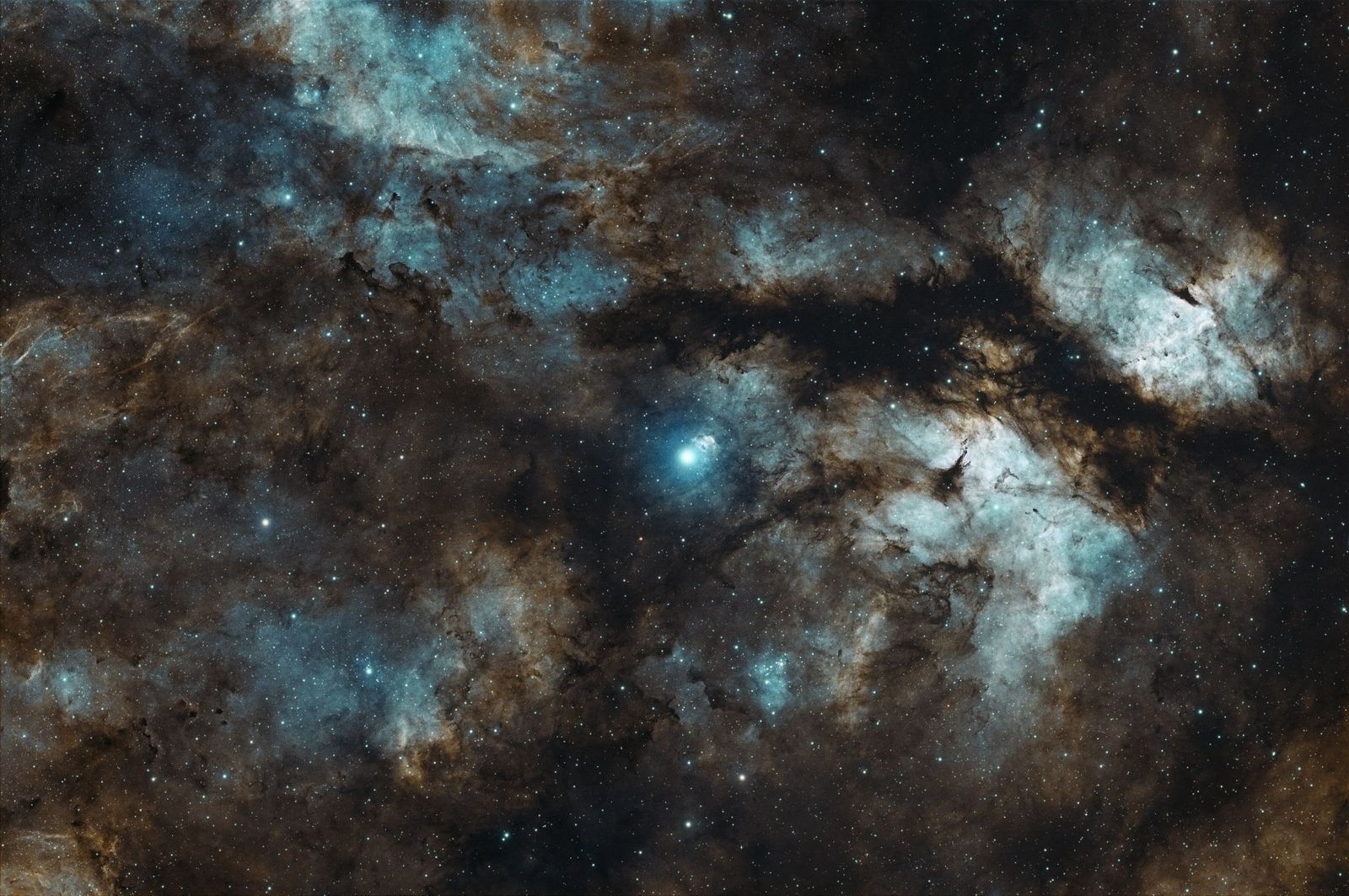
In 1933, Swiss astronomer Fritz Zwicky noticed something impossible about the Coma Cluster of galaxies: its members were moving so fast that the whole cluster should have flown apart. Something unseen had to be holding it together. Zwicky named this dunkle Materie , or dark matter.
Today, scientists estimate that dark matter makes up roughly 85% of all the matter in the universe, and yet it has never been directly detected. Nearly a mile underground in South Dakota, the LUX-ZEPLIN experiment waits for a single dark matter particle to strike 10 tonnes of ultra-pure liquid xenon. It has run the largest search ever attempted and has yet to confirm a single particle.
8 The Taos Hum that some people can hear

In the early 1990s, residents of Taos, a quiet town in the high desert of New Mexico, began complaining of a low, droning hum that some compared to a diesel engine in the distance . Most heard it at night and indoors.
They persuaded New Mexico's congressional delegation to request an investigation. Scientists built an ultra-sensitive microphone from an 18-inch woofer, nicknamed the "big ear," and scanned the electromagnetic spectrum from 20 hertz to 18 gigahertz, an enormous range. But the only event on their ground sensors turned out to be a rodent digging beside the equipment. Of about 1,400 residents who answered a survey, 161 reported hearing the hum, at least 2% of the area's population. Musicians among them placed it near a low E-flat. But the source of the hum has never been confirmed.
9 Abiogenesis: Where did life come to Earth from?
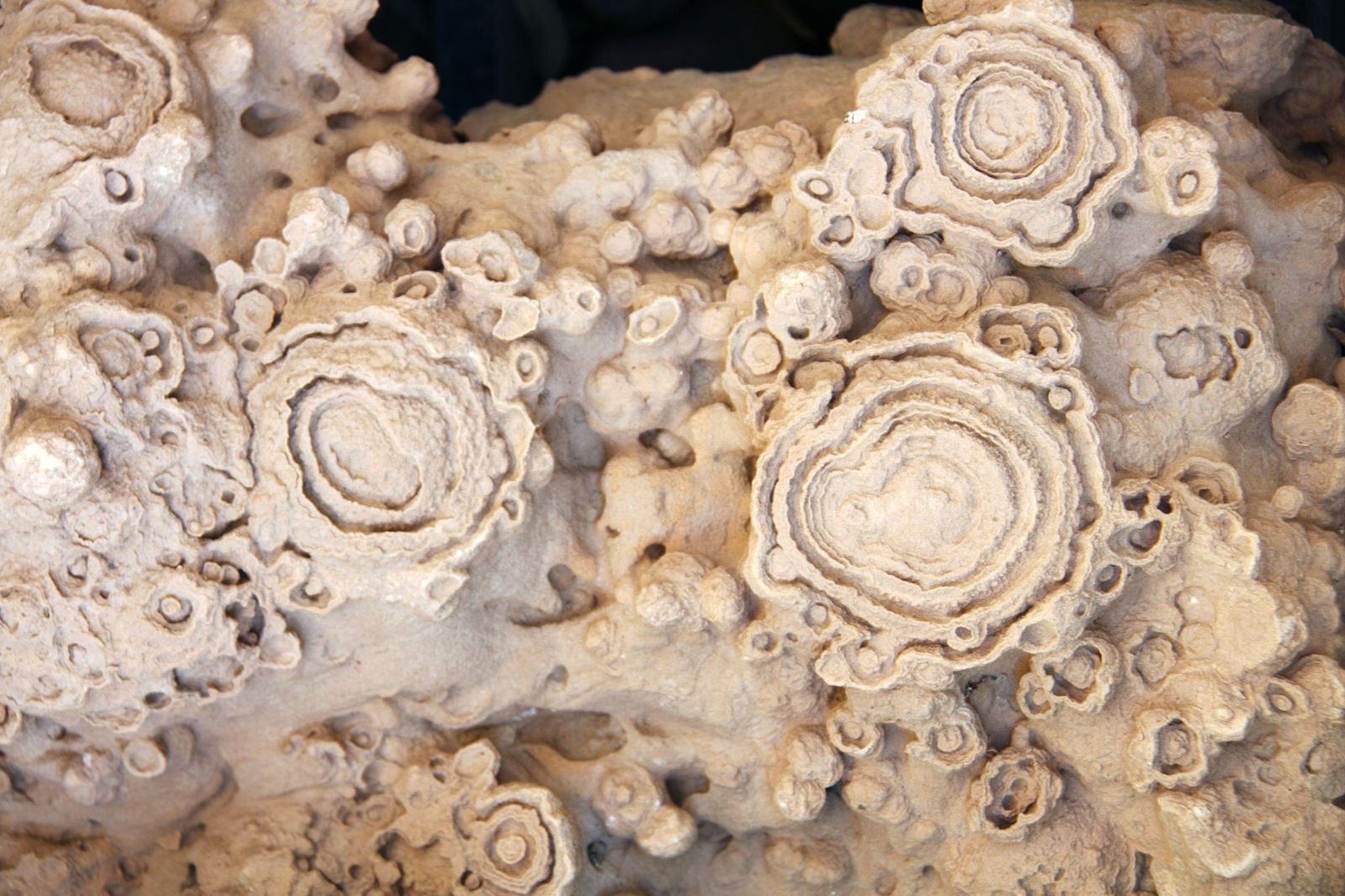
Every living thing on Earth, from bacteria to blue whales, descends from something that once wasn’t alive. How that first step happened is one of the deepest open questions in science. In 1871, Charles Darwin speculated privately, in a letter to his friend Joseph Hooker, that life might have begun in some "warm little pond" full of chemicals, light, heat, and electricity. In 1953, some chemists put the idea to the test. They sealed water, methane, ammonia, and hydrogen in glass and zapped the mixture with artificial lightning, and after about a week, amino acids, the building blocks of proteins, had formed.
Then space joined the story. In January 2025, scientists reported that dust collected in outer space contained 14 of the 20 amino acids life uses to build proteins. The ingredients appear to be scattered across the solar system. Fossils show that life took hold on Earth at least 3.4 billion years ago, yet no laboratory has ever turned those ingredients into something alive.
10 Ball lightning, the unusual electrical phenomenon

For centuries, ball lightning was dismissed as folklore or an optical illusion. In the 1960s, an astronomer described an experience he had while aboard a plane, where a floating ball of light drifted down the aisle after the cockpit had been struck by lightning.
Ball lightning is a glowing sphere that appears during thunderstorms, usually just after an ordinary lightning strike. Witnesses describe balls from the size of a golf ball to several feet across, drifting through the air for anywhere from a second to tens of seconds before fading silently or vanishing with a bang. Scientists have studied the conditions and the elements that might form one, but without a sure explanation. Other theories range from a lightning-triggered hallucination to a miniature black hole.